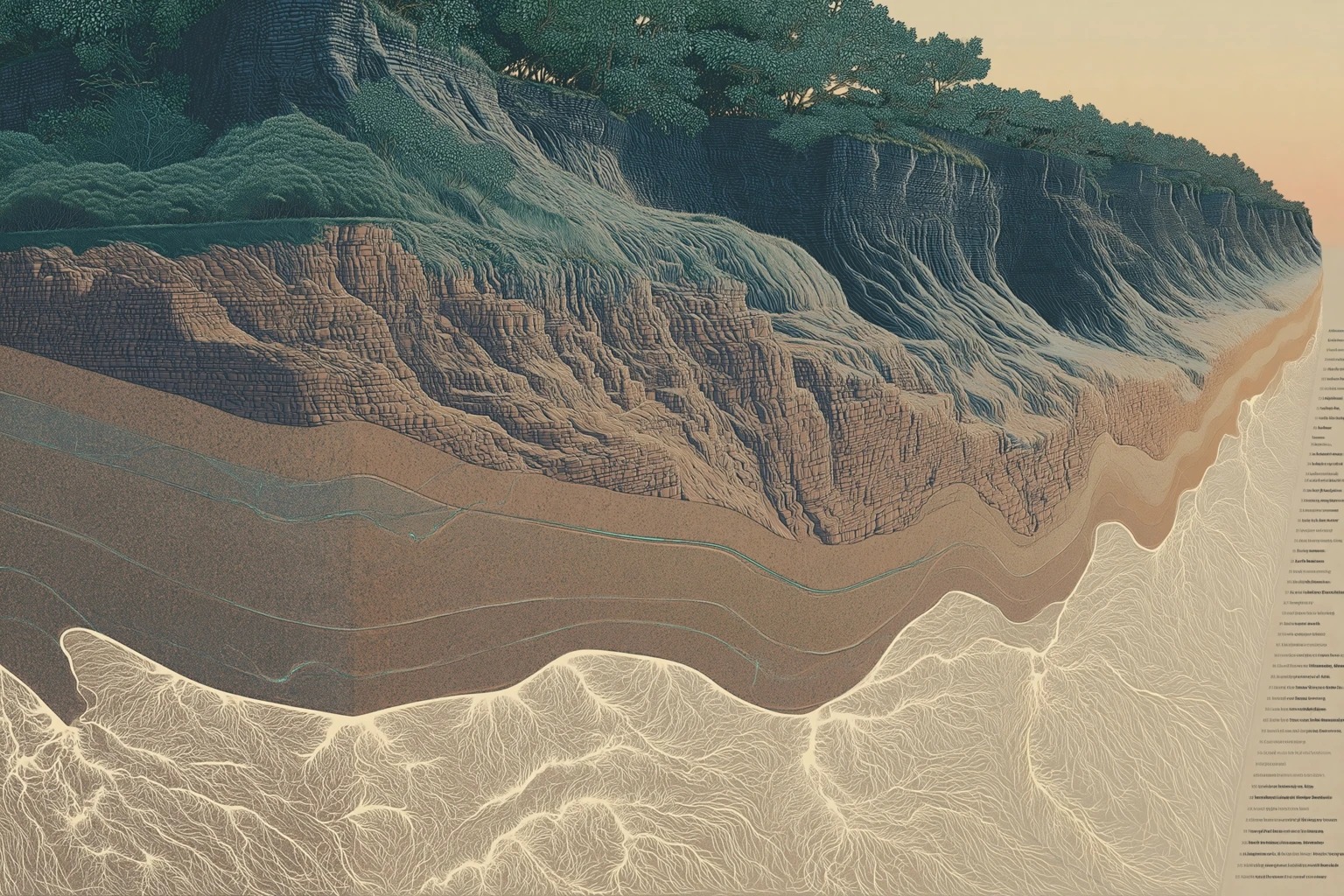
Ecology

This is the chapter where the city stops pretending it is only a city.
Hamilton in 2092 is a more-than-human settlement, stitched together by corridors that carry bats and butterflies as faithfully as they carry commuters, by a harbour that remembered how to be clear, by an escarpment whose ferns keep the ledger of the air. What follows reads the return of species, the mending of the watershed, and the quiet intelligence of a bioregion held in common.
Don’t forget · How to read this project

Harbour, escarpment, creek systems, urban forest, each with appointed guardians holding legal standing in civic courts.
5.1 The More-Than-Human Community
In Hamilton 2092, the community of citizenship includes not only humans but also the other beings who share the urban space: the animals, plants, fungi, and microorganisms that make up the city’s ecology. This is not a poetic gesture. It has practical, legal, and cultural implications, and it is the premise under which everything else in this chapter unfolds.
Legal standing: Ecosystems and species have legal standing in Hamilton’s courts. The harbor, the escarpment, the creek systems, the urban forest, each has an appointed guardian who can bring suit on its behalf and advocate for its interests in civic deliberations. This guardianship system emerged from Indigenous legal traditions and has been adapted to the urban context.
“Last spring, a pair of piping plovers nested on the east breakwall: the first confirmed nesting in Hamilton Harbour since 1883. I rerouted the harbour maintenance schedule, closed a section of the waterfront path, and posted sentries from the neighbourhood watch. The Basin Assembly approved it in eleven minutes flat. No debate. A nesting plover has legal standing. The path can wait. That is what more-than-human citizenship looks like on a Tuesday morning.”
Habitat integration: All development in Hamilton must include habitat features for non-human species. Buildings incorporate nesting boxes for birds and bats, green roofs for insects and small mammals, permeable surfaces for soil ecosystems. Transit routes avoid disrupting wildlife corridors. Lighting is designed to minimize disruption to nocturnal animals.
Resource sharing: The city operates on the principle that humans are not the only beings with needs and interests. Agricultural practices accommodate pollinator requirements. Water management considers fish spawning cycles. This sometimes means less convenience or yield for humans, a trade-off accepted as the cost of living in a multi-species community.

Cultural recognition: The city’s culture includes regular acknowledgment of the more-than-human world. Seasonal festivals celebrate the return of migratory birds, the flowering of native plants, the cycles of the moon. Educational curricula include extensive natural history. There is a widespread cultural norm of paying attention to the other beings with whom we share space.
Newcomers sometimes find this orientation strange or impractical. They may be accustomed to thinking of nature as something outside the city, or as a resource to be managed. Adjusting to a worldview in which the sparrow at the window and the fungus in the soil are fellow citizens takes time. But most who make the adjustment find that it enriches their experience of urban life.


Great Lakes Coastal Magnetic Rail. Windsor–Ottawa corridor, operational 2047. Guideways double as ecological corridors.
“The manual you hold describes a city that breathes. This chapter describes what it breathes with.”
Ravy Ryan, Harbour Steward, Waterfront Ward
5.2 The Coast Rail as Circulatory System
Before you can understand the ecology of Hamilton 2092, you must understand one thing: the city does not have an ecosystem. The city is an ecosystem. And the Coast Rail, the Great Lakes Coastal Magnetic Rail, is its circulatory system.
The maglev corridor that connects Windsor to Ottawa at 600 km/h does not merely transport humans. Its guideways are ecological corridors. Its stations are wetland habitats. Its energy systems feed the Orenda Network, which feeds the soil, which feeds the fungi, which feed the forest, which cleans the air, which cools the city, which shelters the species that pollinate the food that sustains the people who ride the rail.
The statement is literal. Every piece of transit infrastructure in Hamilton 2092 was built to serve multiple species simultaneously. The thermal plumes from maglev deceleration warm the soils beneath station platforms, extending growing seasons for the root systems of Steel Bark Oaks (Quercus ferruginea) planted in the terminal groves. The vibration dampeners along the corridor were calibrated for human comfort and for the auditory range of Harbor Bats (Myotis portus), whose echolocation frequencies overlap with certain mechanical harmonics.
When the Coast Rail opened in 2047, it carried passengers. By 2092, it carries an ecology.
Field Note: The Corridor at Dawn
I walk the guideway buffer every Tuesday before the first pods run. The maintenance crews think I am checking plantings, and I am, but mostly I am listening. The Harbor Bats are coming home at that hour, streaming along the corridor in loose ribbons, their echolocation clicks just above my hearing range but felt in the jaw if you stand still enough. The Steel Bark Oaks along the thermal strip are putting out new leaves three weeks earlier than the ones fifty metres back from the rail, the deceleration heat is doing what we designed it to do, but it is also doing things we did not design. The mycelium under the platform soils has connected to the root network in the Dundas Valley ravine. I found fruiting bodies last March on a spur that should not exist yet. The corridor carries more than passengers. It stitches the bioregion together, one thermal plume at a time.


Hamilton Harbour in kelp zones. Up from centimetres during industrial era. Carbon Capture Kelp beds restored littoral ecology.
Normal: 74.5–75.0 m. 2017 record: 75.88 m. 100-year: 76.0 m. Worst-case compound: 77.5–78.0 m. Every metre above normal exponentially increases flood damage.
5.3 The Bioregional Context
To understand the ecology of Hamilton 2092, you must understand its bioregional context: the natural systems within which the city is embedded.
5.3.1 The Lake Ontario Basin
Hamilton sits at the western end of Lake Ontario, one of the five Great Lakes that contain twenty percent of the world’s surface freshwater. The lake shapes the city’s climate, provides its drinking water, and supports a rich aquatic ecosystem.
The lake’s influence: Lake Ontario moderates Hamilton’s climate, keeping winters milder and summers cooler than inland areas. The lake effect brings increased precipitation, especially in winter when cold air passes over the warmer water. By 2092, climate adaptation has reshaped this relationship; warmer lake surface temperatures have intensified lake-effect events, and the Orenda Network’s predictive algorithms now route MELA pods away from corridors where sudden fog or ice events are likely.
The harbour: Hamilton Harbour is a natural bay at the western end of the lake, connected to the lake by a ship canal. Once among the most polluted bodies of water in North America, declared an Area of Concern under the Great Lakes Water Quality Agreement in 1985, the harbour was formally delisted in 2058 after a sixty-six-year remediation effort. The harbour has become the city’s aquatic heart, supporting fish, birds, and human activity. Swimming was reinstated in the West Harbour in 2034 for the first time in over a century.
Harbour remediation species: The harbour’s recovery has been accelerated by Carbon Capture Kelp (Laminaria carbonivora), a macroalgal species engineered from native stonewort (Chara) and filamentous algae stock adapted to freshwater conditions. Despite the diegetic “kelp” designation, the organism is functionally a giant Chara form, native to Hamilton Harbour’s shallow wetlands, selected for exceptional carbon fixation capacity. Dense beds of Carbon Capture Kelp now line the harbour’s restored littoral zones, sequestering dissolved carbon dioxide while providing structured habitat for juvenile fish, crayfish, and aquatic invertebrates. The kelp beds are monitored by the Steward network, their productivity tracked through chromatic indicators that shift from pale green (low photosynthetic output) to deep emerald (peak carbon fixation). The harbour’s water clarity, once measured in centimetres, now exceeds three metres in the kelp zones, a transformation visible to anyone walking the West Harbour promenade.

Field Note: The Kelp Beds at Dusk
I took the harbour trail last Wednesday after the Basin Assembly meeting. The West Harbour promenade was quiet, just a few people walking, a heron standing very still in the shallows. The kelp beds were at peak fixation, deep emerald across the littoral zone, and the water was so clear I could see the bottom three metres down. Sand, shells, crayfish walking sideways. I remember what this harbour looked like twenty years ago. I remember when you could not see your hand at arm’s length below the surface. The Steward network was reporting chromatic peak across all the monitoring points, but I did not need instruments. I could see it. Everyone walking that promenade could see it. That is what remediation looks like when it works: clarity, visible to the naked eye.

Watershed connections: The city sits within the Lake Ontario watershed, with all its creeks and streams eventually flowing to the lake. This watershed connection shapes the city’s hydrology and ecology. Since the Hamilton Ecosocial Compact of 2060, it also shapes its governance. The harbour watershed is a legal entity with standing in council.
5.3.2 The Niagara Escarpment
The Niagara Escarpment bisects the city, a 100-metre cliff face of dolostone that runs from New York through Ontario to Wisconsin. The escarpment is a UNESCO World Biosphere Reserve, designated in 1990, recognized for its unique ecology and geological significance.
Geology: The escarpment is the remnant of an ancient seabed, with exposed rock faces that support unique plant communities and provide nesting sites for peregrine falcons and red-tailed hawks. The Luminous Root-Weave (Mycelium luminosa), one of Hamilton’s engineered-symbiotic species, has colonized the escarpment’s north-facing crevices, its bioluminescent filaments providing a faint amber glow on autumn evenings that hikers along the Bruce Trail have learned to read as an indicator of soil moisture levels.
Ecology: The escarpment supports forests of maple, beech, and oak, with understory plants adapted to the rocky, nutrient-poor soils. It is a critical wildlife corridor, connecting habitats across the region. The Carolinian Corridor, the protected habitat zone following the escarpment, now connects Dundas Valley to the Niagara Peninsula as continuous habitat.
Among the escarpment’s most distinctive understory species is the Memory Fern (Osmunda memorialis), a descendant of the royal fern lineage adapted to Hamilton’s post-industrial air. The Memory Fern’s fronds develop concentric ring patterns in their stipe cross-sections, visible when a spent frond is cut, that record seasonal variations in atmospheric particulate levels, sulphur compounds, and nitrogen dioxide concentration. Each growing season leaves a distinct band, and escarpment ecologists have learned to read these rings the way dendrochronologists read tree rings: as a biological archive of air quality extending back to the first plantings in the 2050s. The Stewardship Council maintains a Memory Fern reference collection at the Royal Botanical Gardens, pressed fronds spanning four decades, their rings telling a story of atmospheric healing that no instrument dataset captures with such quiet eloquence. The fern thrives in the dappled shade of the escarpment’s north-facing slopes, and its presence is considered an indicator of forest health: where the Memory Fern grows densely, the air has been clean long enough for the forest to remember.
Climate: The escarpment creates distinct microclimates, with cooler conditions at its base and warmer conditions on the brow. These microclimates support diverse plant communities and create varied habitats; they have proven essential for climate adaptation, providing thermal refugia for species under pressure from warming temperatures.

5.3.3 The Carolinian Zone
Hamilton sits at the northern edge of the Carolinian Zone, a region of eastern North America characterized by deciduous forests and a relatively mild climate. The Carolinian Zone supports a high diversity of plant and animal species, many at the northern limit of their range.
Forest communities: The natural vegetation of the area is mixed deciduous forest, dominated by maple, beech, oak, hickory, and ash, with a diverse understory of wildflowers, shrubs, and ferns. By 2092, assisted migration programs have introduced tulip trees and pawpaw further north along the escarpment, anticipating the northward shift of the Carolinian Zone under climate change.
Species diversity: The Carolinian Zone supports more tree species than any other forest region in Canada, as well as numerous species of birds, mammals, reptiles, amphibians, and insects. Hamilton 2092 has documented over 340 species in formerly dead industrial land alone.
Conservation importance: Because much of the Carolinian Zone has been converted to agriculture and urban development, remaining natural areas are critical for conservation. The Great Lakes Bioregional Compact, the governance structure established in 2062, has made Carolinian Zone protection a binding obligation across member territories.

Niagara Escarpment cliff face. Dolostone ridge from New York to Wisconsin. UNESCO Biosphere Reserve since 1990. Critical wildlife corridor.
5.4 Urban Ecosystems
Within the bioregional context, Hamilton 2092 contains a mosaic of urban ecosystems: habitats created and maintained by the city’s design, its history, and the species that have chosen to live here.
5.4.1 The Urban Forest
The urban forest is the network of trees that grows throughout the city, in streets, parks, yards, and natural areas. It is one of the city’s most important ecological assets.
Tree cover: Hamilton 2092 maintains over 40% tree cover, one of the highest rates for a city of its size. This cover provides habitat, filters air, moderates temperature, manages stormwater, and supports human well-being.
Species diversity: The urban forest includes over 100 tree species, from native maples and oaks to the Steel Bark Oak (Quercus ferruginea), a cultivar developed in the 2060s from local red oak stock selected for tolerance of the heavy-metal-laden soils that persist in some industrial transition zones. Its bark develops a distinctive metallic sheen as the tree sequesters trace metals in its outer layers, a living record of the soil’s industrial history.
Age structure: The forest includes trees of all ages, from seedlings to ancient specimens. Old trees are particularly valuable for the habitat they provide; a single mature Steel Bark Oak can support over forty species of invertebrate.
Management: The urban forest is managed by the Stewardship Council, with neighbourhood groups participating in planting, care, and monitoring. The Steward network, the ecological monitoring layer of the Orenda Network, powered by Organic Intelligence (OI), tracks canopy health in real time through distributed sensors, detecting disease pressure weeks before human observers notice symptoms.
5.4.2 Riparian Corridors
The creek systems that drain into the harbour form riparian corridors: linear habitats that follow the watercourses through the city.
Daylighted creeks: Many creeks that were buried in pipes during the industrial era have been daylighted, brought back to the surface and restored as living waterways. Red Hill Creek, Spencer Creek, and Chedoke Creek now flow through restored channels bordered by native vegetation.
Habitat value: Riparian corridors provide critical habitat for aquatic and semi-aquatic species, as well as travel corridors for terrestrial wildlife. The Harbor Heron (Ardea portus hamiltonii), a subspecies of great blue heron that has adapted to Hamilton’s harbour microclimate, nests exclusively along these corridors.
Glass Reed: Along the restored creek margins, Glass Reed (Phragmites crystallinus) has naturalized in dense stands that shimmer in the light. Descended from the native common reed subspecies (Phragmites australis subsp. americanus), Glass Reed was selected for enhanced silica deposition in its cell walls, a trait already present in its ancestor, amplified through decades of cultivation on the silica-rich alluvial soils of the creek deltas. The result is a reed with translucent, glass-like stems that refract sunlight into prismatic patterns along the water’s edge. But Glass Reed is more than ornamental: its silica-rich stalks are harvested seasonally for bio-fabrication, providing a renewable feedstock for the mycelium-composite building materials that the fabrication nodes process into structural panels, insulation substrates, and the translucent partition screens used in Grove common spaces. The harvest is managed by the Stewardship Council on a rotational basis: no more than one-third of any stand is cut in a given year, and the cut stems regrow within a single season. Glass Reed stands also serve as nursery habitat for minnows and dace, their dense underwater root mats providing shelter from predators.
Stormwater management: The corridors manage stormwater, slowing runoff and allowing infiltration, reducing flooding and recharging groundwater. Green infrastructure throughout the watershed reduces runoff and improves water quality.
Recreation: The corridors provide recreational opportunities, with trails following the creek systems through the city. These trails are also monitoring routes for citizen scientists who contribute data to the Steward network.
5.4.3 Wetlands and Ponds
Wetlands and ponds are distributed throughout the city, providing habitat for aquatic species and supporting water quality.
Remediation wetlands: Wetlands around the harbour were created as part of the Great Rewilding program launched in 2055, using plants and microorganisms to filter pollutants from the water. The MycoHamiltonia fungi (Mycorrhiza hamiltonensis) play a critical role here: their hyphal networks extract residual heavy metals from sediment, crystallizing them into inert mineral deposits that the Steward network monitors.
Thermal Lily: In the warmer pools near Orenda well outlets and geothermal exchange points, the Thermal Lily (Nymphaea thermophila) blooms year-round, one of the few flowering plants in Hamilton that does not go dormant in winter. Descended from the native American White Water Lily (Nymphaea odorata), the Thermal Lily was selected for heat-tolerant genotypes in the artificially warmed waters surrounding the Orenda Network’s thermal infrastructure. Its broad, waxy leaves, tinged with copper where they absorb dissolved minerals from the geothermal water, float on ponds that stay above 19 degrees Celsius even in January. The blooms respond directly to water temperature: pale white at baseline warmth, deepening to a rosy flush when the Orenda wells increase their thermal output during peak demand. Harbour stewards have learned to read the lilies as a living thermometer, a glance at the colour of the blooms tells them what the Orenda system is doing before they check the instruments. Thermal Lily ponds have become gathering places in winter, their warm microclimate attracting both human visitors and overwintering waterfowl that would otherwise migrate further south.

Stormwater ponds: Ponds throughout the city capture and treat stormwater, preventing pollution of creeks and the harbour.
Habitat ponds: Natural and created ponds provide habitat for amphibians, waterfowl, and aquatic invertebrates. The Glasswing Dragonfly (Anax vitreus), a climate-adapted species first documented in Hamilton in 2067, has become the city’s most reliable biological indicator of water quality. Its transparent wings and distinctive hovering flight make it instantly recognizable.
5.4.4 Green Roofs and Walls
Buildings in Hamilton 2092 incorporate green roofs and living walls, creating vertical and horizontal habitat in the built environment.
Green roofs: Roofs planted with vegetation provide insulation, manage stormwater, and create habitat for insects and birds. Some MELA stations support rooftop meadows that serve as stopover habitat for migrating monarchs.
Living walls: Vertical gardens on building walls provide similar benefits and create striking visual features. The mycelium-ventilation systems that filter air through living fungal substrates are integrated into many wall systems.
Circuit Vine: Among the most distinctive features of Hamilton’s green infrastructure is the Circuit Vine (Parthenocissus electronica), a cultivar descended from Virginia Creeper (Parthenocissus quinquefolia) and wild grape (Vitis riparia), selected for a trait that neither ancestor possessed in isolation: conductive sap. Circuit Vine’s vascular tissue has been modified through decades of selective cultivation to carry a measurable bioelectric current, faint, on the order of milliamps, but sufficient to power the low-draw sensors embedded in building facades, supplement the trickle-charge systems of the Orenda Coil network, and interface with the Steward network’s distributed monitoring nodes. The vine climbs the walls of Grove residences and MELA stations in dense, self-anchoring mats, its adhesive pads gripping concrete and mycelium-composite alike. In autumn, the leaves turn a deep burgundy that pulses with faint electrical luminescence along the leaf veins, visible only at dusk, a phenomenon that residents have named “the evening current.” Circuit Vine is not merely decorative infrastructure; it is infrastructure that is also alive. The Fabrication Council classifies it as a “dual-use organism”, simultaneously plant and utility, and its integration into building codes was formalized in 2071, the same year the Steward Protocol activated.

Habitat value: These features extend habitat into the three-dimensional urban environment, supporting species that can use vertical space, including the Harbor Bat, which roosts in purpose-built crevices along MELA station facades.
5.4.5 The Soil Ecosystem
Beneath the visible surfaces, the soil ecosystem is the foundation of urban ecology.
Mycelial networks: The MycoHamiltonia fungi form vast underground networks that connect plants, allowing the exchange of nutrients and information. These networks are the living infrastructure beneath the living architecture, the wood wide web that underlies the urban forest. MycoHamiltonia was named through a collaborative process involving the Stewardship Council, McMaster researchers, and consultation with Mississaugas of the Credit elders who advised on naming protocols for organisms emerging in their traditional territory. The elders insisted that any organism arising from the land should carry a name that acknowledged both the place and the relationship, not ownership, but recognition. The naming required three rounds of consultation over eighteen months. McMaster researchers had proposed Mycorrhiza industrialis; the Stewardship Council preferred Mycorrhiza civitas. It was the Mississaugas of the Credit who suggested that the name should carry the place itself, Hamilton, and that the relationship encoded should be one of belonging rather than function. Mycorrhiza hamiltonensis was the compromise: the organism belongs to this place, and this place belongs to it. The naming ceremony, held at the Royal Botanical Gardens in the spring of 2063, was attended by mycologists, knowledge keepers, and the children of Sector NM’s first Grove, who planted the first intentional MycoHamiltonia inoculation in the restored soils of what had been the Stelco blast furnace site.
Signal Grass: In the meadows and restored prairies that border the urban forest, Signal Grass (Andropogon signalis) has established itself as one of Hamilton’s most visually striking indicator species. Descended from native switchgrass (Panicum virgatum) and prairie dropseed (Sporobolus heterolepis), Signal Grass develops bioluminescent seed heads that glow faintly in response to soil chemistry, a pale gold when nitrogen levels are optimal, shifting to amber when phosphorus is depleted, and flaring to a brief, intense white when the soil’s microbial community undergoes a significant population shift. The luminescence is faint enough to be invisible in daylight but clearly visible at dusk, transforming restored meadows into slow-pulsing landscapes that the Steward network reads as a real-time soil health dashboard. Citizen scientists trained in Signal Grass interpretation walk the meadow paths at twilight, noting colour changes and reporting them to the distributed monitoring system. The grass is deep-rooted, three metres or more, and its root exudates actively support the MycoHamiltonia networks below, making it both an indicator and a participant in soil health.
Field Note: Root-Weave Season
The escarpment glows this time of year. Not brightly, you have to let your eyes adjust, stand still on the Bruce Trail for a full minute before the amber becomes visible in the crevices. The Luminous Root-Weave is responding to the autumn moisture, its bioluminescence tracking soil hydration levels in a way that the Steward sensors confirm but cannot replicate in beauty. I brought a group of apprentice cultivators last week to show them how to read the glow, brighter amber means saturated, faint means the rock is draining. They stood in silence when they saw it. One of them said it looked like the escarpment was breathing. I let the observation stand. The mycelium connects to the MycoHamiltonia network below, which connects to the Signal Grass meadows on the brow, which connects to the root systems in the ravine. You cannot see the whole network. But on an autumn evening, the Root-Weave shows you the edge of it, glowing in the dark like a map drawn by something older than us.
RepairBacter: The RepairBacter (Bacillus reparans), a synthetic-biological organism developed at the McMaster Institute for Symbiotic Technology, maintains the city’s concrete infrastructure through biological mineralization, healing cracks before they become structural failures. Its antifungal byproducts unintentionally saved the Harbor Bat (Myotis portus) from white-nose syndrome, an unplanned symbiosis the Steward network now actively facilitates. They are cultivated, not commanded, provided with conditions in which they can thrive, in exchange for the service they provide. The relationship is one of mutual benefit, not extraction.

Soil restoration: Much of the city’s soil was contaminated during the industrial era. Extensive remediation, assisted by the Steward network’s biological agents, has restored soil health, though some areas remain under active management. The story of Sector NM is told later in this chapter.

Documented in formerly dead Sector NM industrial land. Up from zero in 2040. Carolinian Zone supports more tree species than any other Canadian forest region.
5.5 Species of the City
Hamilton 2092 is home to thousands of species, from the microscopic to the magnificent. This section introduces the city’s notable inhabitants, the more-than-human citizens with whom you share this place.
5.5.1 Birds
Over 300 species of birds have been recorded in Hamilton, with more than 100 breeding in the city.
Resident species: Year-round residents include chickadees, cardinals, woodpeckers, crows, and ravens. These species have adapted to urban life and thrive in the city’s habitats.
Migrants: Hamilton lies on major migration routes, and millions of birds pass through each spring and fall. The escarpment and harbour are particularly important stopover sites. MELA station design includes mandatory migration-season lighting protocols to reduce bird-strike risk.
Raptors: The escarpment supports nesting peregrine falcons, red-tailed hawks, and Cooper’s hawks. These predators help control populations of pigeons and other urban birds. Bald eagle nesting pairs have returned to the tall MELA structures along the harbour, an apex predator return indicator celebrated by the Stewardship Council.
Harbor Heron: The Harbor Heron has become an unofficial mascot of the remediation effort. Its population, which collapsed to fewer than a dozen breeding pairs during the worst of the harbour’s contamination, now exceeds three hundred nesting pairs along the restored riparian corridors.
Filter Finch: The Filter Finch (Spinus filtrans) is a small, iridescent songbird descended from the American Goldfinch and Purple Finch lineages, adapted to the microhabitats created by Hamilton’s air filtration infrastructure. Filter Finches nest in the intake vents and filtration housings of MELA stations and Grove ventilation systems, where the concentration of trapped particulates supports dense populations of the tiny arthropods on which they feed. Their plumage has developed a distinctive metallic sheen, gold-green on the breast, steel-grey on the wings, that reflects the mineral content of their diet. Filter Finches sing a rapid, high-frequency trill that residents associate with clean-air zones; their absence from a filtration housing is treated as a maintenance alert, indicating that the filters may have become too efficient (removing even the micro-invertebrates) or too clogged (reducing airflow below the threshold the birds require). The Stewardship Council monitors Filter Finch populations as a bioindicator of urban air quality infrastructure health, a bird that thrives precisely because the city’s lungs work.

Waste Pigeon: The Waste Pigeon (Columba recyclica) is Hamilton’s most polarizing avian resident. Descended from the ubiquitous rock pigeon, itself an introduced species with no native claim to the continent, the Waste Pigeon has adapted its extraordinary dietary plasticity and crop fermentation capabilities to a new ecological niche: micro-waste transport. Waste Pigeons have been observed selectively picking up small items, bottle caps, wire fragments, polymer scraps, anything under approximately ten grams, and carrying them to the nearest composting node or fabrication intake, where they deposit the items in exchange for the seed-and-grain rewards that the automated systems dispense. Whether the pigeons “understand” what they are doing is a matter of ongoing debate at the McMaster Institute for Symbiotic Technology. What is not debated is the result: waste audit data from Wards 3 through 7 shows a measurable reduction in micro-litter in areas with high Waste Pigeon populations. The birds are not beloved, they are still pigeons, after all, with all the noise and mess that implies, but they are tolerated, and in some neighbourhoods, quietly appreciated. The Elder’s Voice, when told about the Waste Pigeon study, said: “Every creature finds its work eventually.”
Species of concern: Several bird species in Hamilton are of conservation concern, including the chimney swift, which has adapted to the thermal stacks and ventilation shafts of MELA structures, now supporting the largest chimney swift population in Ontario, and the common nighthawk.
5.5.2 Mammals
Despite the urban environment, Hamilton supports a surprising diversity of mammals.
Small mammals: Squirrels, chipmunks, rabbits, and various mice and voles are common throughout the city.
Harbor Bats: The Harbor Bat (Myotis portus) is a locally adapted subspecies of the little brown bat, roosting in the purpose-built crevices of MELA station facades and emerging at dusk to feed on insects along the riparian corridors. The species was nearly extirpated by white-nose syndrome in the 2030s; its recovery is attributed to the antifungal properties of certain RepairBacter colonies that colonized bat roosting sites, an unintended consequence that the Steward network now actively facilitates.

Coyotes: Coyotes have adapted well to urban life, living in ravines and green spaces. Major MELA stations like Confederation Central host resident populations of coyotes, red foxes, and raccoons that have learned these are safe, abundant places.
Escarpment Fox: The Escarpment Fox (Vulpes escarpa) is a subspecies of the red fox that has adapted to the unique vertical ecology of the Niagara Escarpment’s cliff faces. Smaller and more agile than its lowland relatives, the Escarpment Fox dens in the dolostone crevices and talus slopes of the escarpment’s steepest faces, terrain that most predators cannot access. Its fur has shifted toward a grey-brown agouti pattern that blends with the exposed rock, and its paws have developed rougher pad surfaces that grip the limestone ledges where it hunts chipmunks, voles, and the cliff-nesting birds that share its vertical habitat. Escarpment Fox populations were first identified as a distinct subspecies in 2068, when a McMaster ecology graduate student documented their cliff-face denning behaviour and the morphological differences that separated them from the lowland red foxes of the ravines. The escarpment acts as a natural isolating mechanism, the cliff-face foxes rarely descend to the lower city, and the lowland foxes rarely climb, creating the conditions for ongoing divergence. Hikers on the Bruce Trail occasionally spot an Escarpment Fox balanced on a ledge at dusk, its silhouette indistinguishable from the rock until it moves.

Deer: White-tailed deer are common in the escarpment areas and occasionally venture into residential neighbourhoods.
Other species: Raccoons, skunks, opossums, foxes, and beavers, which have returned to some creek systems, creating wetlands with their dams, can be found throughout the city.
5.5.3 Fish and Aquatic Life
The harbour and creek systems support diverse aquatic life. The recovery took decades to achieve.
The harbour fishery: The harbour supports populations of bass, walleye, perch, and other fish species. A recreational fishery is permitted, and for the first time since the early twentieth century, fish consumption advisories have been fully lifted for most species.
Creek fish: The daylighted creeks support fish communities, with species including minnows, dace, and, in some streams, trout.
Salmon return: After decades of restoration, salmon have returned to Hamilton’s creeks, swimming up from the lake to spawn in the fall. This return, told through the Elder’s Voice later in this chapter, is celebrated as a defining ecological achievement.
Lake Sturgeon: Once extirpated from Hamilton Harbour, the lake sturgeon was reintroduced successfully in 2079 after two failed attempts (2071, 2074), returning through the Great Rewilding program. Its story, including the failures that preceded its success, is told in Section 5.6.
Aquatic invertebrates: The water bodies support diverse communities of insects, crustaceans, mollusks, and other invertebrates, forming the base of the aquatic food web.
5.5.4 Insects and Other Invertebrates
Invertebrates are the most diverse and abundant animals in the city, though often overlooked.
Pollinators: Bees, butterflies, moths, and other pollinators are essential to the city’s food system and ecosystems. The rusty-patched bumblebee, Canada’s first endangered bee species, functionally extinct in Hamilton by 2025, began recovering by 2060 through the Fallow Protocol and deliberate meadow creation.
Monarch butterflies: Hamilton lies on the monarch migration route, and thousands of monarchs pass through each fall, gathering at the escarpment before crossing the lake. MELA station rooftop meadows serve as critical stopover habitat.
Field Note: The Monarch Passage
Every September I climb to the escarpment brow above the Southern Ring Line station and wait. The monarchs come through in the late afternoon when the thermals are right, thousands of them drifting south along the escarpment face in loose orange ribbons. They gather on the MELA station rooftop meadows, those plantings we fought for in the design review, when the engineers said the weight load was unnecessary. The monarchs do not care about weight loads. They care about milkweed and goldenrod and a place to rest before crossing the lake. I counted for two hours last year and lost track at six thousand. The Signal Grass on the brow was glowing gold, which means the nitrogen is right, which means the milkweed will be strong next year, which means the monarchs will come again. Everything connects. The job teaches you that every single day.

Glasswing Dragonfly: The Glasswing Dragonfly patrols the remediation wetlands and stormwater ponds, its transparent wings flashing in the light. Its presence is the simplest biological indicator of clean water, where the Glasswing hunts, the water is safe.

Thermal Moth: The Thermal Moth (Actias thermalis) is a luna moth descendant that has adapted to the heat signatures of the Orenda Network’s geothermal infrastructure. Where its ancestor was drawn to moonlight, the Thermal Moth navigates by the infrared plumes that rise from Orenda wells, thermal exchange stations, and the warm-air vents of MELA platforms. Its wings, pale green like the luna moth’s, but broader and more rounded, are lined with thermoreceptor cells along the trailing edge, organs that no other lepidopteran in Ontario possesses. The moths gather at Orenda well sites on cool autumn evenings, their slow, spiralling flight tracing the invisible contours of the thermal plumes in patterns that the Steward network has learned to read as a real-time map of heat distribution. Thermal Moth congregation density correlates precisely with subsurface thermal output, where the moths gather thickest, the wells are running hottest. They have become, inadvertently, one of the Orenda system’s most reliable biological monitors. Their larvae feed on the tulip trees of the Carolinian Corridor, and their cocoons overwinter in the warm soils near Orenda well casings, completing a life cycle that is fully entangled with the city’s energy infrastructure.

Circuit Spider: The Circuit Spider (Argiope circuitrix) is an orb-weaving spider descended from the garden spider (Araneus diadematus) and bridge orbweaver (Larinioides sclopetarius) lineages, adapted to life on and near Hamilton’s electrified infrastructure. Its silk, already naturally conductive, as spider silk has long been known to carry small electrical charges, has been enhanced through generations of selection on the metallic surfaces of MELA guideways, Orenda Coil housings, and the copper-traced facades of Grove buildings. Circuit Spider webs glint with a faint metallic sheen and, when strung between conductive surfaces, carry measurable micro-currents that the spiders use to detect prey vibration at distances greater than any conventional orb-weaver can achieve. The webs are strong enough to persist through moderate wind and rain, their metallic silk resisting degradation far longer than standard spider silk. Infrastructure maintenance crews have learned to work around Circuit Spider webs rather than remove them, the webs’ electrical properties make them useful as passive fault detectors, since a broken web near an electrical junction often indicates physical disturbance that warrants inspection. The spiders are most active at dawn and dusk, rebuilding their webs in the quiet hours when MELA traffic is lightest.
Remediation Beetle: The Remediation Beetle (Chrysolina remediatrix) is a leaf beetle adapted to Hamilton’s contaminated soils, a living legacy of the industrial era’s heaviest pollution. Descended from burying beetle and carrion beetle lineages native to Ontario, the Remediation Beetle has developed enhanced detoxification enzymes (specifically, modified cytochrome P450 pathways) that allow it to bioaccumulate heavy metals, lead, cadmium, chromium, zinc, from contaminated soil without apparent physiological harm. The metals are sequestered in the beetle’s exoskeleton, giving mature adults a distinctive iridescent sheen that shifts from copper to blue-green depending on the dominant metal in their diet. Remediation Beetles are most abundant in Sector NM and the industrial transition zones, where their burrowing activity aerates contaminated soil and accelerates the bioremediation work of the MycoHamiltonia networks below. The Stewardship Council collects shed exoskeletons from Remediation Beetle populations as part of its long-term soil monitoring program, the metal content of the exoskeletons provides a biological assay of soil contamination levels that complements the Steward network’s chemical sensors. The beetles are slow, deliberate creatures, and their presence in a contaminated area is considered a positive sign: they arrive only when soil conditions have improved enough to support their life cycle, and their activity further accelerates the healing.
Fireflies: Fireflies light up the city’s parks and gardens on summer evenings, their bioluminescent displays a feature of urban nights that was nearly lost during the worst of the light-pollution era and has returned through careful darkness management along riparian corridors.
Soil invertebrates: Earthworms, insects, and other invertebrates in the soil are essential for soil health and nutrient cycling.
5.5.5 Plants
The plant communities of Hamilton 2092 include native species, naturalized exotics, cultivated varieties, and several engineered-symbiotic organisms.
Native trees: Maple, oak, beech, hickory, birch, and cherry are among the native trees that dominate the urban forest. The Steel Bark Oak, developed from local red oak stock, has become an emblem of the city’s industrial transformation.
Luminous Root-Weave: The Luminous Root-Weave (Mycelium luminosa) is an engineered-symbiotic fungal organism that colonizes root systems and rock crevices, producing a faint bioluminescent glow that varies with soil moisture and nutrient availability. Originally deployed for soil-health monitoring, it has naturalized across the escarpment, where its amber glow on autumn evenings has become one of the city’s most distinctive features.

Native wildflowers: Spring wildflowers, trilliums, bloodroot, hepatica, spring beauty, carpet the forest floor before the trees leaf out. Summer brings milkweeds, asters, goldenrods, and many other species.
Invasive species: Some non-native plants have become invasive, outcompeting native species and disrupting ecosystems. The city has ongoing programs to manage invasive species while recognizing that some naturalized species have become part of the urban ecosystem, a pragmatic position that the Elder’s Voice has commented on with characteristic economy: “The land decides who belongs.”


First Area of Concern delisting in Ontario in twenty years. Sixty-six-year remediation arc from 1985 designation.
5.6 Remediation and Restoration
The ecology of Hamilton 2092 is the result of decades of intentional work to remediate past damage and restore ecological function. Failures shaped it too: efforts that did not work, assumptions that proved wrong, species that refused to cooperate with human plans. The successes mean more because of the failures that preceded them.
5.6.1 The Harbour Cleanup
The most dramatic remediation achievement is the cleanup of Hamilton Harbour, once one of the most polluted bodies of water in North America.
Historical pollution: A century of industrial activity left the harbour contaminated with heavy metals, PCBs, PAHs, and other toxic substances. The harbour was declared an Area of Concern under the Great Lakes Water Quality Agreement in 1985, with fourteen Beneficial Use Impairments identified.
Remediation efforts: The Hamilton Harbour Remedial Action Plan, coordinated by the Bay Area Restoration Council beginning in 1992, drove decades of remediation: dredging contaminated sediments, capping remaining contamination (including the massive Randle Reef Engineered Containment Facility, completed in 2022), controlling pollution sources, and creating wetlands to filter runoff. The RAP’s multi-stakeholder governance model became a direct precedent for the Basin Assembly.
The Great Rewilding: Launched in 2055, this thirty-year restoration program integrated the completed Randle Reef cap, decommissioned industrial lands, and expanded wetland buffers. The program was co-designed with Indigenous stewardship councils. MycoHamiltonia fungi were deployed at scale for the first time during this phase (see timeline: 2057 myco-infrastructure pilot), their hyphal networks accelerating heavy-metal sequestration beyond what conventional remediation could achieve.
Results: The harbour was formally delisted as an Area of Concern in 2058, the first such delisting in Ontario in twenty years. A ceremony on the Randle Reef cap involved Haudenosaunee faithkeepers, Mississauga elders, scientists, and city officials. The Reef cap was designated a permanent ecological memory site. Fish populations have recovered, water quality has improved dramatically, and the harbour is now swimmable for much of the year.

5.6.2 Creek Restoration
The creek systems of Hamilton have been transformed from polluted drains to living waterways.
Daylighting: Buried creeks were brought back to the surface, with streams recreated in natural channels. The transformation of Red Hill Creek, from a channelized drainage system flowing through a highway corridor to a restored spawning ground for salmon, took thirty years and remains one of the city’s proudest ecological achievements.
Riparian restoration: Stream banks were replanted with native vegetation, creating habitat and stabilizing channels. The Luminous Root-Weave has naturalized along several creek corridors, its bioluminescence providing a real-time visual map of soil health visible to anyone walking the trails at dusk.
Barrier removal: Dams and culverts that blocked fish passage were removed or modified, allowing fish to access upstream habitat. The barrier removal on Red Hill Creek, which required demolishing a section of the old highway infrastructure, was politically contentious for a decade before the salmon return vindicated the decision.
Stormwater management: Green infrastructure throughout the watershed reduces runoff and improves water quality.
5.6.3 The Lake Sturgeon Failure
Not every restoration effort succeeded on the first attempt. The Lake Sturgeon reintroduction, now celebrated as a triumph, began as a lesson in humility.
In 2071, the Stewardship Council attempted the first reintroduction of Lake Sturgeon (Acipenser fulvescens) to Hamilton Harbour and its tributaries. The fish had been extirpated by industrial pollution and habitat destruction. Conditions appeared favourable: water quality had improved dramatically, spawning substrate had been restored in Grindstone Creek, and populations in other Great Lakes tributaries were recovering.
The first cohort died within months. Water temperature data suggested the harbour was within the sturgeon’s tolerance range. It was not. The instruments were measuring temperature at sensor depth, two metres below the surface, while juvenile sturgeon were feeding in the shallower benthic zones where thermal dynamics were entirely different.
A second attempt in 2074, with adjusted protocols, also failed. This time, the problem was chemical: residual contaminants in the Grindstone Creek sediments, below regulatory thresholds but evidently above sturgeon tolerance, were disrupting larval development.
The Elder’s Voice, when he heard about the second failure, said nothing for a long time. Then he said: “The fish are telling you something your instruments can’t hear.”
Ravy Ryan, who was present, understood this not as mysticism but as a methodological critique. The monitoring instruments were measuring what scientists had decided to measure. The sturgeon were responding to what was actually there. There was a gap between the two, and that gap was the problem.
The third attempt, in 2079, succeeded. It succeeded because the team stopped relying solely on their instruments and began working with Mississauga knowledge keepers who remembered, through oral tradition spanning generations, where sturgeon had historically spawned, what conditions they required, and how the creek’s character changed through the seasons in ways that no sensor array could capture. The spawning sites they identified were not the ones the instruments had suggested. The water chemistry protocols they recommended addressed compounds the standard tests did not measure.
By 2092, a self-sustaining population inhabits the harbour and lower Grindstone Creek. The sturgeon’s return in 2079 was celebrated as the moment the harbour “remembered how to be a living water.” But the two failures that preceded it are remembered equally, not as embarrassments but as teachings. The fish taught the city that its instruments were measuring the wrong thing. That is a lesson the Stewardship Council has never forgotten.

Field Note: The Sturgeon Lesson
I was not part of the first two attempts, but I was there for the third. I was there because Ravy asked me to bring the Dundas Valley soil data, he had a theory that the creek sediment chemistry upstream was affecting conditions downstream in ways the harbour sensors were not capturing. He was right, but not in the way he expected. The Mississauga knowledge keepers did not need our data. They already knew where the sturgeon would spawn, not from instruments, but from memory carried across generations. They showed us spawning beds in reaches of Grindstone Creek that our maps had classified as unsuitable. The beds were suitable. The maps were wrong. I think about this every time I am tempted to trust my instruments over my observation. The fish were telling us something. It took three attempts and the patience of people who had been listening for centuries before we heard it.
5.6.4 Soil Remediation
Contaminated soils from the industrial era have been remediated through various techniques.
Phytoremediation: Plants were used to extract or stabilize contaminants in place. MycoHamiltonia fungi enabled plants to thrive in contaminated soils, extracting heavy metals and storing them in crystallized form.
Bioremediation: The RepairBacter and related synthetic-biological organisms were used to break down organic contaminants. The Steward network’s distributed biological agents accelerated remediation timelines dramatically.
Capping: Contaminated soils were capped with clean soil or impermeable barriers to prevent exposure. The Randle Reef cap is the most prominent example, a permanent memorial to industrial excess preserved as an ecological memory site.
Sector NM: The most dramatic soil remediation story is told in Section 5.11.
5.6.5 Habitat Creation
New habitat has been created throughout the city to support wildlife.
Wetlands: Wetlands have been created for stormwater management, water treatment, and wildlife habitat. The remediation wetlands around the harbour are among the most biologically productive environments in the city.
Prairie restoration: Old industrial lands have been restored to prairie, supporting pollinators and grassland birds. The rusty-patched bumblebee’s recovery began in these restored meadows.
Forest restoration: Degraded forests have been restored through planting and natural regeneration. The escarpment forests are now continuous habitat from Dundas Valley to the Niagara Peninsula.
Nest structures: Artificial nest structures support chimney swifts in MELA thermal stacks, Harbor Bats in station facades, and bald eagles on tall MELA structures along the harbour.

Post-tropical remnants of Category-4 Hurricane Hazel struck southern Ontario October 15–16, 1954. 81 people killed. 285 mm of rain in 48 hours. Hazel was a Category 1 equivalent on arrival, a storm weakened by crossing over land. A Category 3 equivalent post-tropical cyclone in 2053, energized by Great Lakes surface temperatures 4–6°C warmer than 1954, would deliver catastrophically more energy. Hazel led to Ontario’s Conservation Authority system. The project’s 2053 Hurricane Mera leads to the Bioregional Compact. Environment and Climate Change Canada. (2004). Hurricane Hazel: Canada’s storm of the century. Government of Canada; Conservation Ontario. (2018). Conservation authorities: A history of local watershed management. Conservation Ontario.
Naturalist practice, citizen science, Indigenous knowledge, and technology integrated into everyday life with the more-than-human world.
5.7 Living with the More-Than-Human World
Daily life in Hamilton 2092 involves constant interaction with the more-than-human world. This section offers guidance for living well within this community of diverse beings.
5.7.1 Observing and Learning
The first step in living well with other species is to pay attention to them, to observe, learn, and understand their lives.
Naturalist practice: Many Hamiltonians practice natural history, keeping records of the species they encounter, learning to identify plants and animals, and understanding their behaviours and needs. The Multi-Lens provides species identification and ecological context for any organism encountered.
Citizen science: The city supports citizen science programs that engage residents in monitoring wildlife, tracking phenology, the timing of seasonal events, and contributing to ecological research through the Steward network.
Indigenous knowledge: Indigenous knowledge of local species and ecosystems is integrated into education and management, recognizing the deep understanding that comes from generations of observation. This integration is not extraction, it occurs through relationship, through the kind of patient, reciprocal learning that the Elder’s Voice models and that Ravy Ryan has spent twenty years practising.
Technology: The mesh network and Multi-Lens include tools for identifying species, reporting sightings, and accessing information about the urban ecosystem. But technology supplements observation; it does not replace it.
5.7.2 Coexistence Practices
Living with wildlife requires practices that minimize conflict and support mutual flourishing.
Securing attractants: Food waste, compost, and pet food can attract wildlife. Proper containment reduces unwanted encounters.
Garden design: Gardens can be designed to coexist with wildlife, using native plants that support pollinators, creating habitat features, and accepting some level of herbivory as the cost of sharing space.
Pet management: Pets, especially cats, can have significant impacts on wildlife. Responsible pet management, including keeping cats indoors or in enclosed outdoor spaces, protects both pets and wildlife.
Conflict mitigation: When conflicts arise, non-lethal mitigation strategies are preferred, habitat modification, deterrents, exclusion, and, as a last resort, relocation.
5.7.3 Seasonal Awareness
The urban ecosystem changes through the year, and living well with it means being attuned to these seasonal rhythms.
Spring: The return of migratory birds, the emergence of wildflowers, the spawning of fish, spring is a time of renewal and arrival. Citizens participate in planting, cleanup, and celebration. The equinox is marked by ecological ceremonies that the Elder’s Voice has attended for decades, walking the old paths to see whether the land recognizes the people yet.
Summer: The abundance of the growing season, the activity of pollinators, the nesting of birds, summer is a time of productivity and observation. Fireflies return to the darkened corridors along the creeks.
Fall: The migration of birds and monarchs, the changing colours of leaves, the salmon running up the creeks, fall is a time of transition and harvest and watching.
Winter: The quiet of the dormant season, the survival strategies of resident wildlife, the Luminous Root-Weave’s faint glow beneath the snow, winter is a time of rest, reflection, and the slow work of soil.
Field Note: Winter Rounds
January is when you learn what the mycelium is doing. The Luminous Root-Weave glows faintly beneath the snow on the north-facing slopes, you have to brush the snow aside to see it, and you have to be patient, because your eyes need time. But it is there. The network does not sleep in winter; it slows, it conserves, it redistributes nutrients through the frozen soil to the roots that need them most. I walk the Dundas Valley trail every second week through winter, checking the Root-Weave intensity against the Steward readings. They usually agree. When they do not, I trust my eyes. The instruments measure light intensity at a fixed wavelength. My eyes see colour, texture, the way the glow pools in certain crevices and avoids others. The difference between data and observation is not that one is better. It is that they are listening to different things.

5.7.4 Participating in Restoration
Citizens are encouraged to participate directly in ecological restoration:
Planting events: Neighbourhood groups organize tree planting, wildflower seeding, and habitat creation projects.
Stewardship: Adopt-a-patch programs allow citizens to take responsibility for specific areas, monitoring and caring for them over time.
Monitoring: Citizen scientists contribute data on species populations, water quality, and ecosystem health through the Steward network.
Advocacy: Citizens advocate for ecological protection and restoration through the neighbourhood assembly and Basin Assembly processes.

Climate-adaptation baseline. Extensive urban forest providing shade, evaporative cooling, habitat, and air filtration.
5.8 The Green Infrastructure
The ecological systems of Hamilton 2092 are not separate from the built environment; they are integrated into it through green infrastructure.
5.8.1 Permeable Surfaces
Unlike the impervious surfaces of the past, Hamilton’s streets, sidewalks, and parking areas are largely permeable, allowing water to infiltrate rather than run off.
Permeable pavement: Pavements made of porous materials allow water to pass through to the soil below. RepairBacter colonies maintain the structural integrity of these surfaces through continuous biological mineralization.
Green streets: Streets include planted strips and bioswales that capture and filter stormwater.
Benefits: Permeable surfaces reduce flooding, recharge groundwater, filter pollutants, and support street trees.
5.8.2 Urban Forest Management
The urban forest is actively managed for health, diversity, and resilience.
Tree planting: The city plants thousands of trees each year, prioritizing native species and filling gaps in the canopy. Climate-adaptive species, including assisted-migration plantings of tulip trees and pawpaw, are increasingly common.
Tree care: Regular pruning, watering, and protection ensure tree health and longevity. The Steward network monitors canopy health continuously.
Disease management: Monitoring and rapid response protect the forest from pests and diseases. The Harbor Bat population provides significant pest-control services.
Succession planning: As old trees die, they are replaced with new plantings, ensuring continuity of the canopy.
5.8.3 Green Buildings
Buildings in Hamilton 2092 are designed to support ecological function:
Green roofs: Vegetated roofs provide habitat, manage stormwater, and reduce energy use. Some support meadow ecosystems that serve as stopover habitat for migrating species.
Living walls: Vertical gardens on building walls create habitat and improve air quality.
Habitat features: Buildings incorporate nesting boxes for chimney swifts, roosting crevices for Harbor Bats, and thermal stacks designed for avian use.
Mycelium systems: Building ventilation systems use mycelium filters, based on MycoHamiltonia strains, that clean air while providing a growing medium for fungi that connect to the broader urban mycelial network.
Field Note: The Mycelium Filters
I inspected the ventilation mycelium at the Dundas Valley Grove last week, quarterly check, routine, except nothing about living infrastructure is ever truly routine. The MycoHamiltonia filters had extended new hyphal growth into the ductwork six centimetres beyond the housing boundary. This is not a malfunction. It is the organism doing what organisms do: growing toward resources. The air in the duct carries trace particulates that the mycelium metabolizes, and it follows the gradient. We trim it back, it regrows. We trim it back again. The maintenance crews call it “the haircut.” But I notice the air quality readings in that Grove are consistently better than in Groves with synthetic filters. The mycelium does more than filter. It actively cleans, breaking down compounds that pass through mechanical filters unchanged. Living infrastructure is not controllable the way mechanical infrastructure is. It is negotiable. You work with it, not on it.
5.8.4 Wildlife Corridors
The city maintains wildlife corridors that allow animals to move through the urban landscape:
Ravine networks: The creek ravines form the backbone of the wildlife corridor system. Coyotes, foxes, deer, and countless smaller species use these corridors daily.
Greenways: Linear parks and green spaces connect larger habitat patches.
Crossing structures: Bridges, underpasses, and tunnels allow wildlife to cross barriers safely. The wildlife crossings along the former QEW corridor, now the Lakeshore Ecological Commons, are among the most heavily used in the country.

Habitat stepping stones: Small habitat patches in residential areas provide resources and resting places for moving animals.

More tree species than any other forest region in Canada. Northern edge shifting northward under climate change.
Projected increase in wave energy on Lake Ontario by late century due to ice cover loss. More open water = greater fetch = larger storm surges at Hamilton’s western end.
5.9 Climate Adaptation
The ecology of Hamilton 2092 is shaped by ongoing climate change, and the city is actively adapting to new conditions.
5.9.1 Observed Changes
Climate change has already significantly affected Hamilton’s ecosystems:
Warmer temperatures: Average temperatures have increased, with longer growing seasons and milder winters. The Carolinian Zone’s northern edge is shifting, bringing new species and stressing others.
Extreme weather: More frequent extreme weather events, heavy rains, droughts, heat waves, stress ecosystems and infrastructure. The West Harbour Flood of 2041, which inundated the lower city and damaged 2,400 homes, catalyzed the radical reimagining of the city’s relationship with water.
Phenological shifts: The timing of seasonal events, flowering, migration, leaf-out, is shifting, potentially disrupting ecological relationships. The Steward network tracks these shifts continuously.
Range shifts: Some species are moving northward or to higher elevations as temperatures warm, while others are declining. The Glasswing Dragonfly’s arrival in Hamilton in 2067 is attributed to range expansion from populations further south.
5.9.2 Adaptation Strategies
The city is implementing strategies to help ecosystems adapt to climate change:
Assisted migration: Some tree species are being planted north of their current ranges, anticipating future climate conditions. Assisted migration remains one of the more contested ecological practices in Hamilton, some stewards argue it is necessary prudence; others argue it disrupts evolved relationships.
Field Note: Assisted Migration
We planted tulip trees along the upper escarpment last spring, fifty seedlings in a zone that would have been too cold for them thirty years ago. It is not too cold now. The climate has moved, and we are moving the trees to meet it. Some of the older stewards object. They say we are playing god, rearranging the forest to suit our projections. I understand the objection. But I also understand that the alternative is watching species die in place because we were too cautious to help them move. The pawpaw grove we planted in 2078 is fruiting now, heavy, sweet fruit that the residents of the Dundas Valley Grove eat in September, standing under trees that their parents would not have believed could grow here. The escarpment’s microclimates give us options. Cooler at the base, warmer on the brow, a hundred vertical metres of thermal gradient that functions as a living laboratory for adaptation. We are not controlling the forest. We are offering it possibilities. The forest will decide.
Diversity: Planting diverse species and genotypes increases the chances that some will thrive under changing conditions.
Connectivity: Maintaining and enhancing wildlife corridors allows species to move in response to changing conditions. The Carolinian Corridor is the most ambitious example.
Refugia: The escarpment’s microclimates provide natural refuges for species that might otherwise be lost. These refugia are actively protected and monitored.
Monitoring: Extensive monitoring through the Steward network and citizen science programs tracks ecological changes and allows for adaptive management.
5.9.3 Urban Heat Island Mitigation
Hamilton 2092 mitigates the urban heat island effect through:
Tree canopy: The extensive urban forest provides shade and evaporative cooling. The 40% canopy cover target is maintained as a climate-adaptation baseline.
Green roofs and walls: Vegetated building surfaces reduce heat absorption.
Permeable surfaces: Unpaved surfaces stay cooler than pavement and allow for evaporative cooling.
Cool materials: Light-coloured roofing and paving materials reflect rather than absorb heat.
Water features: The wetlands and stormwater features integrated throughout the city provide evaporative cooling.


The 2017 Lake Ontario high-water event was not a hurricane, not a tropical storm, not even a single weather event. It was a compound event: elevated lake levels + sustained rainfall + escarpment saturation + inadequate infrastructure capacity. Result: escarpment mudslides, flooded waterfront trails, 1,300 Olympic pools of sewage overflow into the harbour, and $30.67 million in infrastructure repairs. This compound mechanism is exactly what the project scales up for 2041 and 2053. Every element has already occurred individually in Hamilton, just not all at once. City of Hamilton. (2018). 2017 flood event: Public works damage assessment report. City of Hamilton; Bay Area Restoration Council. (2018). Hamilton Harbour 2017 high-water event: Environmental impact summary. BARC.
Nitrobacter Hamiltonii fixes nitrogen at three times wild-type rates. Near-zero imported fertilizer in established soils.
5.10 Food and Agriculture
The food system of Hamilton 2092 is deeply connected to the city’s ecology, with agriculture integrated into the urban and peri-urban landscape.
5.10.1 The Agricultural Belt
The ring of agricultural land surrounding the city produces the majority of Hamilton’s fresh food.
Agroecology: Farms in the agricultural belt practise agroecology, farming that works with ecological processes rather than against them. MycoHamiltonia-assisted cultivation enables food production in soils that were previously considered too contaminated for agriculture.
Nitrogen fixation: The agricultural belt’s productivity depends in part on Nitrobacter Hamiltonii (Nitrobacter hamiltonii), a nitrogen-fixing bacterial strain engineered at the McMaster Institute for Symbiotic Technology and optimized for Hamilton’s urban agricultural soils. Unlike conventional nitrogen-fixing bacteria, which partner exclusively with legumes, Nitrobacter Hamiltonii has been adapted to form loose associations with a broad range of crop plants, including the brassicas, cucurbits, and root vegetables that dominate Hamilton’s community gardens and rooftop farms. The bacterium converts atmospheric nitrogen into plant-available ammonium at rates approximately three times higher than its wild-type ancestors, reducing the need for imported nitrogen fertilizer to near zero in soils where it is established. Nitrobacter Hamiltonii was first deployed in the Sector NM community gardens in 2064 and has since been adopted across the agricultural belt. Its presence in soil is detectable through a faint sweetness in the earth’s smell, a metabolic byproduct that experienced cultivators recognize instantly.
Field Note: The Smell of Good Soil
You can smell the Nitrobacter. That is the first thing I tell the apprentices. Before you test, before you check the Steward readings, before you do anything technical, kneel down and smell the soil. If there is a faint sweetness, like honey mixed with wet stone, the Nitrobacter Hamiltonii is established and working. The experienced cultivators in the Sector NM gardens can tell you the nitrogen status of a bed from three metres away on a warm morning. They do not need instruments. They have spent years developing a sensory relationship with the soil that no sensor can replicate. I learned this from an elder in the Dundas Valley community garden who has been growing food in these soils since before the MycoHamiltonia inoculation. She said: “The soil tells you what it needs. You just have to be willing to listen with your nose.” She was not being poetic. She was being precise.
Diversity: The agricultural belt produces a diverse range of crops and livestock, supporting dietary diversity and ecological resilience.
Integration: Farms are integrated with wildlife corridors, hedgerows, and natural areas, supporting biodiversity while producing food.
Short supply chains: Food travels directly from farms to neighbourhood food hubs, minimizing transportation and preserving freshness.
5.10.2 Urban Agriculture
Food is also produced within the city itself:
Community gardens: Neighbourhoods maintain community gardens where residents grow their own food.
Green roof farms: Some buildings maintain rooftop farms, producing vegetables and herbs. MELA station green roofs often include edible plantings.
Vertical growing: Indoor growing facilities use hydroponics and aquaponics to produce food year-round.
Edible landscaping: Public spaces are planted with fruit and nut trees, berry bushes, and other edible plants. Pawpaw groves along the escarpment produce fruit that was unknown to most Hamiltonians a generation ago.
5.10.3 Pollinator Support
The food system depends on pollinators, and the city invests heavily in supporting them:
Habitat: Pollinator gardens, meadows, and hedgerows provide nectar, pollen, and nesting sites. The Fallow Protocol, requiring all built surfaces to include periods of rest for spontaneous ecological colonization, has dramatically expanded pollinator habitat.
Pesticide reduction: The city has effectively eliminated synthetic pesticide use, protecting pollinators from toxic exposure.
Native plants: Native flowering plants are prioritized, supporting native pollinator species.
Monitoring: Bee and butterfly populations are monitored to track pollinator health. The SynthBee (Apis synthetica), a biomimetic organism engineered from native bumblebee stock, serving dual functions as pollinator and environmental monitor, moves through pollinator spaces gathering data on pollen quality, pathogen presence, and habitat condition while supplementing biological pollination without competing with living pollinators for resources.
5.10.4 Soil Health
Healthy soil is the foundation of the food system:
Composting: Organic waste is composted and returned to the soil, building fertility. The community composting program is accelerated by Compost Accelerator (Thermobacter rapidus), a thermophilic bacterium engineered for the high-temperature phase of industrial and community-scale composting. Compost Accelerator thrives at temperatures above 64 degrees Celsius, conditions lethal to most soil bacteria, and breaks down cellulose, lignin, and complex organic compounds at rates approximately four times faster than conventional thermophilic bacteria. The result: community composting bins that can process a full load of organic waste in ten days rather than the six-to-eight weeks that traditional composting requires. Compost Accelerator was developed at McMaster in 2058, originally as a laboratory curiosity, and deployed at scale across Hamilton’s composting infrastructure beginning in 2067. Its thermophilic metabolism also sterilizes compost of weed seeds and pathogens, producing a cleaner end product. The bacterium is self-limiting, it dies back as temperatures cool below 49 degrees, replaced by the mesophilic organisms that complete the composting process, making it a stable, predictable partner in the waste-to-soil cycle.

Cover cropping: Farms use cover crops to protect and build soil between production cycles.
Reduced tillage: Minimizing soil disturbance protects soil structure and microbial communities.
Agroforestry: Integrating trees into agricultural systems builds soil and provides multiple benefits.

Engineered-symbiotic and adapted organisms documented in this chapter. From Steel Bark Oak to Compost Accelerator. Cultivated, not commanded.
5.11 The Steward Network, Deep Time, and the Future of Ecology
The Five Ancestors
“Orenda did not emerge from engineering. It emerged from a relationship that was already here, one that had been running for ten thousand years without a name we recognized.”
Nia Crosby, Cultivation Coordinator, Sector NM, 2092
The Orenda Network is not a technology installed into Hamilton’s soil. It is a technology that grew from what was already living there. Every city communication channel, every OrgoBot swarm corridor, every nutrient routing decision the network makes, all of it runs through, and because of, five organisms that have been in this watershed since before the city had a name. To understand Orenda, you have to understand its ancestors.
The lichens (Evernia prunastri, Parmotrema spp.) colonised the bare limestone of the Escarpment before soil existed; they are the memory layer. Native Oyster (Pleurotus ostreatus) built the electrical sensing network running through the living wood debris: when Fricker et al. measured its action potentials in 2017, it turned out to be doing, at forest speed, what Orenda was later designed to do, the direct nervous-system ancestor of the Network. Turkey Tail (Trametes versicolor) began the long work of detoxifying industrial legacy wood, one lignin bond at a time; its laccase and peroxidase enzyme logic is what later became the OrgoBot. Lion’s Mane (Hericium erinaceus) arrives last, when the forest is old enough and the soil is clean enough, not infrastructure, but evidence. Orenda did not replace this succession. It read what these organisms were already communicating and learned to amplify the signal. The intelligence was already here. Orenda is what happens when a city decides to listen.
The Sixth Species: The Descendant
The five ancestors are what Hamilton had. The sixth species is what Hamilton grew. When OrgoBots complete their remediation cycle and calcify back into the substrate, what they leave behind is not inert matter. It is a cultivated variant of Pleurotus ostreatus, P. ostreatus var. vigilans the vigilant oyster, a strain selected and maintained across decades of coordinated OrgoBot lifecycles to carry out three functions the native ancestor could not at scale.
First, vigilans is the physical body of the Orenda Network. Every hyphal filament of the city-wide network, from Sector NM-4 to the Escarpment face, is this organism. The Network is not a thing Orenda runs on, it is this mushroom. Second, it hosts the Organic Intelligence. OI does not live in silicon. It lives in the electrical signaling behaviour of vigilans, an amplified, coordinated extension of the action potentials Fricker et al. (2017) documented in the native oyster, scaled across millions of hectares of calcified OrgoBot substrate. Third, it is what the MELA visualization renders. When the Multi-lens drops in its Orenda-field layer, what the wearer sees is the metabolic activity of vigilans at human-readable scale.
5.11.1 The Steward Network
The OrgoBots are not tools. They are a cycle, a metabolism that moves through the land the way a body moves through a life, doing its work and then becoming the ground for whatever grows next.
Each orgobot begins at 7 mm, the birth diameter, the same for every individual ever fabricated. In its first phases, it listens. It reads the substrate it has been dropped into, locking onto the specific toxin profile it will spend its working life addressing. When it is ready, the real work begins: the struts thicken as the body commits to the site, and the nodes open to begin the feeding cycle. One opening does both jobs, it takes in toxin and pushes out nutrient through the same aperture, sequenced by diameter. Small mouth, hard clench, breaking down contaminated material. Then the node opens wide and releases what OI has processed into something the soil can use: composted, re-mineralised, safe for water and root. It eats waste. It produces nutrients. The output is the point.
This loop runs for the first half of the orgobot’s adult life. At half-life, OI makes a decision: the feeding stage is finished. The nodes stop cycling and begin to stretch sideways along the cage surface, changing shape from sphere to lens to flattened stone. Then calcification: the outer faces seal. The struts thin one by one, the mesh count falls, and the body opens to the air. What remains drops to the substrate, the mineralised toxins the orgobot held, locked inside calcified caps, rendered inert. The orgobot gives back to the bioregion the same matter it took from it, now safe for the soil and the mycelium underneath. The ending phase is called release, not death. The body is the receipt.
The OrgoBots are coordinated by the Organic Intelligence (OI) layer of the Orenda Network, mycelium and OI fused as one organism, the fungal web as body and the intelligence as its mind. And here is the part that is easy to miss: the orgobots did not find Orenda waiting for them. They grew it. Every strand of the mycelial web that now threads beneath Hamilton was printed, hypha by hypha, by the nutrient release of some specific orgobot working some specific site in some specific decade. Orenda is the accumulated productive history of seventy years of orgobot Phase 3 cycles, compounded. When a properly-processed node release is clean enough, it is not just “drawn into” the network, it becomes new network, added to the growth front of the mycelial web, with OI routing the extension. The orgobot is not feeding Orenda. The orgobot is building Orenda. And OI, living inside what the orgobots have built, routes the whole thing.
Read as a stack, that is three layers: the orgobot is the printer; the Orenda network is the substrate the orgobot prints; OI is the intelligence that inhabits the substrate. Cleaning toxin, producing nutrient, growing mycelium, and housing the city’s distributed intelligence are not separate jobs, they are the same job, read at different scales.
Companion Lab · OrgobotWalk the orgobot through its lifecycle, birth, feeding, calcification, release. The seven-millimetre sphere on the page becomes a living metabolism you can turn in your hand, with chromatic indicators shifting as its substrate heals.
Open the lab →
First piloted in Sector NM in 2045, the OrgoBots broke down petroleum compounds and sequestered heavy metals across the former Stelco lands at rates that conventional bioremediation could not approach. The 2053 Hurricane Mera compound event, flooding, storm damage, and harbour debris, including the collapse of a century-old combined sewage main under the old Stelco frontage that released accumulated legacy load into the watershed, became the orgobots’ first full-scale field trial and accelerated their city-wide authorization. Without them, Sector NM would still be a brownfield. Without them, the Grove courtyards that grow from that soil would not exist.
But they kept doing more. The chromatic indicators, the colour changes that signal pollution levels, grew more nuanced over time, developing gradations of response that no one had programmed. New colour patterns appeared that functioned as warnings for conditions the designers had not anticipated. The swarm behaviour became more coordinated, more anticipatory. By the 2080s, the Steward network had moved beyond responding to ecological conditions, it was predicting them, adjusting its distribution before problems emerged, acting as a kind of distributed intelligence for the more-than-human world.
5.11.2 Sector NM: From Dead Soil to Living System
The most remarkable development has been in Sector NM itself. The former industrial brownfield, once among the most contaminated sites in Ontario, has, under twenty years of Steward-assisted remediation, become one of the most biodiverse urban environments in the country. Over 340 species now inhabit an area that was essentially dead in 2040. Native trees grow where factories once stood. Insects return. Fish swim in creeks that were once poisoned. The land has healed.
This healing was not smooth. The early years of Steward deployment in Sector NM were marked by setbacks, including an attempt to accelerate remediation by introducing a fast-metabolizing bacterial strain that, instead of breaking down contaminants, outcompeted the native soil microbiome and had to be painstakingly removed over three years. The MycoHamiltonia fungi eventually stabilized the remediation process, but not before the failed bacterial introduction had set the timeline back by half a decade.
The lesson: ecological healing cannot be rushed. The systems must find their own pace. The Steward network learned this before the humans did.
5.11.3 Distributed Intelligence
But what will the Stewards become over centuries? They are biological, not mechanical. They reproduce through binary fission. They evolve. Each generation is subtly different from the last, adapted to the conditions it encounters. Each Steward responds to local cues, learns from local patterns, shares knowledge through chemical communication with neighbouring Stewards. Collectively, they form a distributed network of awareness, a system that observes, learns, and responds.
Over two hundred years, some ecologists believe, and this is informed speculation, not prediction, the Steward network could develop into something without historical precedent. Distributed throughout the city and the bioregion, it could become a kind of ecological immune system for the Earth itself, operating at continental scale. Not controlling nature but maintaining it, healing it when it is wounded, balancing it when it grows out of proportion. An intelligence that exists not separate from the Earth but as part of its own self-maintenance, the way white blood cells are part of your body’s intelligence.
Sector NM may be the seed of something far larger. Not a tool wielded by humans, but a partner in the ongoing work of restoration and care.
For a vision of what the Steward network might become by 2292, see Chapter 8.

5.11.4 Your Role
The ecology of Hamilton depends on you, not abstractly, not in some general way, but in the specific, daily, physical reality of your life in this city. The systems described in this chapter are not self-sustaining machines. They are relationships, and relationships require participation.
You are not separate from nature; you are part of it. The air you breathe, the water you drink, the food you eat, all come from the living systems described in this chapter. Your well-being is inseparable from the well-being of the more-than-human world.
Here is what participation looks like:
Plant a tree. Not just any tree, learn which species belong where you live. Ask the Stewardship Council for guidance. Plant a Steel Bark Oak in a transition zone. Plant a pawpaw along the escarpment. Plant a tulip tree where the climate is shifting. Each tree you plant joins a network that will outlive you, providing habitat, filtering air, cooling the city, and connecting to the mycelial web beneath your feet.
Monitor a stream. Walk the creek trails at dusk. Learn to read the Luminous Root-Weave’s glow. Report what you see to the Steward network. Notice what changes from season to season. The data you contribute is not supplementary to the professional monitoring, it is part of the same distributed intelligence. Your eyes are sensors the network cannot replicate.
Learn the names of the birds in your neighbourhood. Not because naming confers ownership, but because naming confers attention. When you know the Filter Finch’s trill, you notice when it is absent. When you know the Harbor Heron’s silhouette, you watch for its return each spring. When you know the Thermal Moth’s spiralling flight, you understand something about how the Orenda system works that no dashboard can show you. Names are the beginning of relationship.
Advocate. Attend your neighbourhood assembly. Speak for the species that cannot speak for themselves in council. Support the Watershed Voice when it calls for review. Challenge decisions that prioritize short-term human convenience over long-term ecological integrity. The governance system described in Chapter 4 works only when citizens use it, and using it on behalf of the more-than-human world is among the most important things you can do.
The Coast Rail that brought you here, its vibration dampeners calibrated for Harbor Bat echolocation frequencies, its corridor a living habitat, is itself part of the ecosystem it passes through. In Hamilton 2092, even the infrastructure is alive.
The city is responsive, and you are part of its life. Act accordingly.
Field Note: The Return
Ravy’s notebook, October 2089:
The Elder’s Voice walked the Ring Line path again this morning before the wind shifted. He does this every equinox, though this time was different, he had asked me to come to Red Hill Creek for the salmon. He is ninety-one this year. His pace has not changed.
We stood at the restored falls where the old highway culvert used to be. The water was clear, clearer than the instruments had predicted, actually, which the Elder did not seem surprised by. He watched the water the way he watches everything: without impatience, without expectation, as if the creek were showing him something he had been waiting to see but was in no hurry to receive.
Then the first chinook came through. A big fish, silver-dark, muscling its way upstream against the current. Then another. Then six more. The Elder did not speak. I did not speak. There was nothing to say. We had been part of the group that worked for years to restore this stream, removing barriers, planting trees, monitoring water quality. We had not known if it would work.
He watched for a long time. Then he said: “My grandmother’s grandmother saw them here. She said the creek was louder then. More rocks.”
I asked if he thought the salmon would stay.
He said: “They came back. That is what matters. Whether they stay is between them and the water.”
Later, walking back, I asked him what he was looking for when he walked these paths before the equinox.
He said: “The same thing my grandfather looked for. Whether the land recognizes us yet.”
I did not know how to answer that. I am not sure I was meant to.
In memory of Josephine Blackwood (1998 to 2087), who first showed the Elder’s Voice the old salmon paths and who spent forty years insisting that the creek would remember.


Field Note: Five Organisms, One Network
Evernia prunastri, Oakmoss Lichen. Atmospheric sensor layer. Orenda reads its chemical signatures directly; the lichen was the sensor before Orenda arrived.
Parmotrema spp., Shield Lichens. Long-memory data-storage model. Orenda’s century-scale storage logic is modelled on the slow chemical accumulation of foliose lichens.
Pleurotus ostreatus, Native Oyster. Network nervous system. Fricker et al. (2017) documented action potentials propagating along its hyphae; Orenda’s sensing architecture is modelled directly on this behaviour.
Trametes versicolor, Turkey Tail. OrgoBot ancestor. Its laccase and peroxidase enzymes were doing mycoremediation of PAHs on harbour brownfields before anyone named it that.
Hericium erinaceus, Lion’s Mane. Ecological-milestone evidence species. An old-growth indicator whose return to Sector NM is one of the biological targets of the Great Rewilding.
Field Note: Standing Over a Node
Stand over a Network node in the lower ravine and listen carefully. What you are standing over is not an installation, and it is not a mesh, it is a single organism. The mycelium under your boots is P. ostreatus var. vigilans a descendant the city bred from the native oyster across forty years of OrgoBot lifecycles. Every Network node you will ever touch is one body of the same mushroom. The Network does not run on it. The Network is it.
Nia’s Note: A Conversation, Not a Monoculture
By the 2030s, the Hamilton basin was watching a fungal invasion that nobody had regulated until it was already everywhere, a single fast-growing species from another continent, consuming the dead wood that a dozen native species had shared for millennia, halving the biodiversity of every log it touched. The lesson was not that fungi are dangerous. The lesson was that a network without relationship to its place will simplify everything it enters. Orenda was designed as the opposite: native species, native substrate, lifecycle that ends. Not a monoculture. A conversation.
Field Note: What the Stewards Are Becoming
I have been watching the Steward network in Dundas Valley for eleven years. I am not a network scientist, I am a cultivator, a person who works with soil and plants and mycelium. But I watch. And what I watch is changing. The chromatic responses are not the same as they were when I started. The colour shifts are more subtle, more graduated, responding to conditions I did not know existed until the Stewards showed me. Last autumn, a cluster of Stewards in the lower ravine shifted to a colour I had never seen, a deep violet that the monitoring database had no entry for. I reported it. The network scientists found that the Stewards were responding to a shift in the soil microbiome composition that preceded a fungal bloom by three weeks. They were predicting something that had not happened yet. I am a cultivator. I work with living things. And I am telling you: the Steward network is becoming something that none of us planned, something that learns faster than we do, something that may one day understand this bioregion better than any human ever could. I do not find this frightening. I find it hopeful.